
Construction dust keeps coming back after a remodel because the finest particles never stay where you can see them. They drift into vents, settle on walls and trim, work into carpet and upholstery, and collect in crevices — then normal airflow and foot traffic put them right back into the air. A regular vacuum and a dust rag remove what is visible while leaving behind the fine material that continues to resettle. For homeowners trying to work out how to get construction dust out of the house after remodeling, the answer is usually a detailed room-by-room cleaning process rather than another quick surface pass.
Final Touch Cleaning Services provides a post-construction cleaning service designed specifically for the fine dust, residue, and debris left behind after renovation and remodeling work in Dayton, OH and the surrounding Miami Valley.
Why Construction Dust Keeps Resettling: The Real Causes
The frustrating part about construction dust in a house after a project is that a room can look clean one evening and have a visible layer of dust again the next morning. That is not a sign you cleaned badly. It is a sign the dust is still sitting somewhere you have not reached yet.
| Cause | Why It Keeps Coming Back |
| Fine drywall and sanding dust | Very fine particles settle slowly and become airborne again when people walk through the room or surfaces are disturbed |
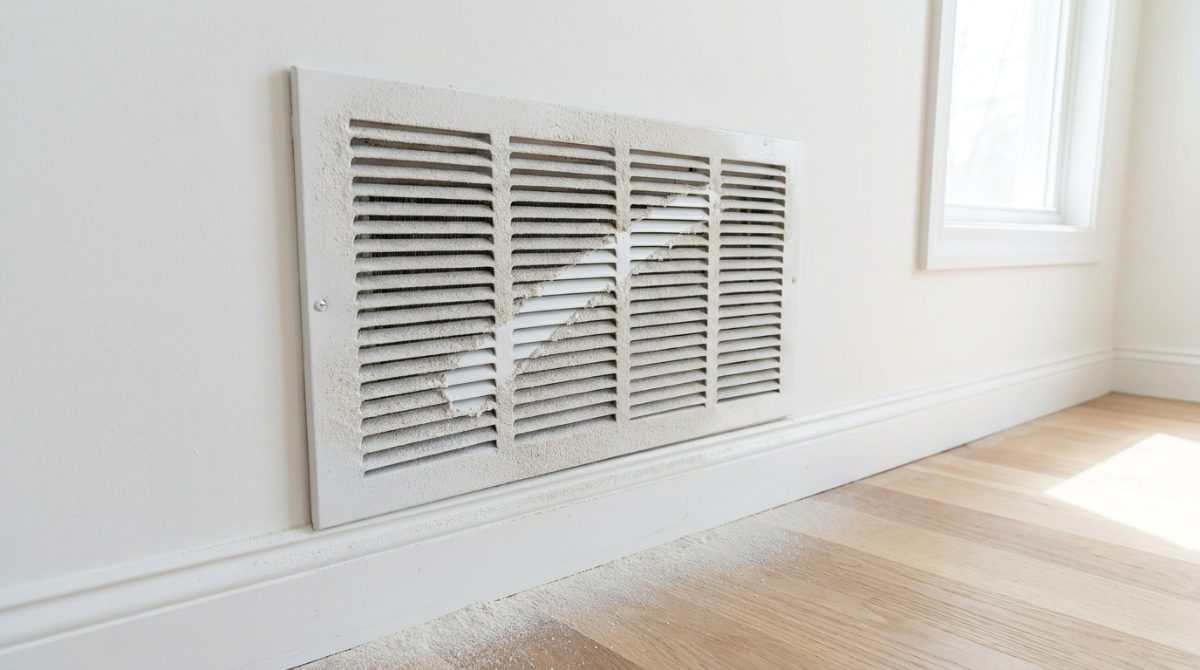
| HVAC vents and airflow | Dust around vents and HVAC-adjacent surfaces can be redistributed every time the heating or cooling system runs |
| Carpet and upholstery fibers | Fine particles settle deep into fabric, rugs, carpet, curtains, and upholstered furniture |
| Trim, ledges, and crevices | Dust collects on baseboards, door frames, molding, window tracks, and narrow gaps that are easy to overlook |
| Walls and ceilings | Fine dust clings to vertical and overhead surfaces instead of simply falling to the floor |
| Incomplete first-pass cleaning | Dry wiping or quick vacuuming can move particles from one area to another instead of fully capturing them |
How Long Does It Take for Construction Dust to Settle?
There is no single fixed timeframe. It depends on how much sanding or demolition was done, how air moves through the home, the size of the room, the surfaces involved, and how thoroughly the first cleanup was completed.
Fine dust can keep settling for days, and sometimes longer after major work — particularly after drywall sanding. Every time a door opens, a vent runs, a rug is disturbed, or furniture is moved, previously settled particles can become airborne again.
Why Are a Regular Vacuum and Dust Rag Not Enough?
Household tools are useful for routine house cleaning, but they are not built for detailed construction dust removal.
A quick vacuum pass may collect larger debris while the smallest particles stay on walls, trim, vents, ledges, fabrics, and corners. Dry dusting can also move particles instead of trapping them: dust brushed off a shelf often lands on the floor, the furniture, or the next surface over.
The best way to clean construction dust is to work systematically from higher surfaces downward, addressing both the visible areas and the less obvious places where fine dust collects.
How to Get Construction Dust Out of Your House for Good
If you are trying to work out how to get dust out of the house after construction, focus on where the dust is hiding rather than only where it is visible.
| Area | What to Clean |
| Vents and HVAC-adjacent areas | Clean visible vent covers and the surrounding surfaces; check or replace the appropriate HVAC filters |
| Floors | Vacuum thoroughly before wet cleaning, using a method suited to the flooring material |
| Walls and ceilings | Remove loose dust carefully before wiping appropriate surfaces |
| Trim and baseboards | Clean edges, ledges, molding, door frames, and corners |
| Fabric and upholstery | Vacuum upholstered surfaces and launder washable soft goods where practical |
| Windows and frames | Clean glass, sills, tracks, frames, and surrounding trim |
| Fixtures | Dust and wipe light fittings, shelves, hardware, and other exposed fixtures |
| Kitchen and bathrooms | Detail counters, cabinets, fixtures, sinks, and finished surfaces |
1. Start With Vents and High Surfaces
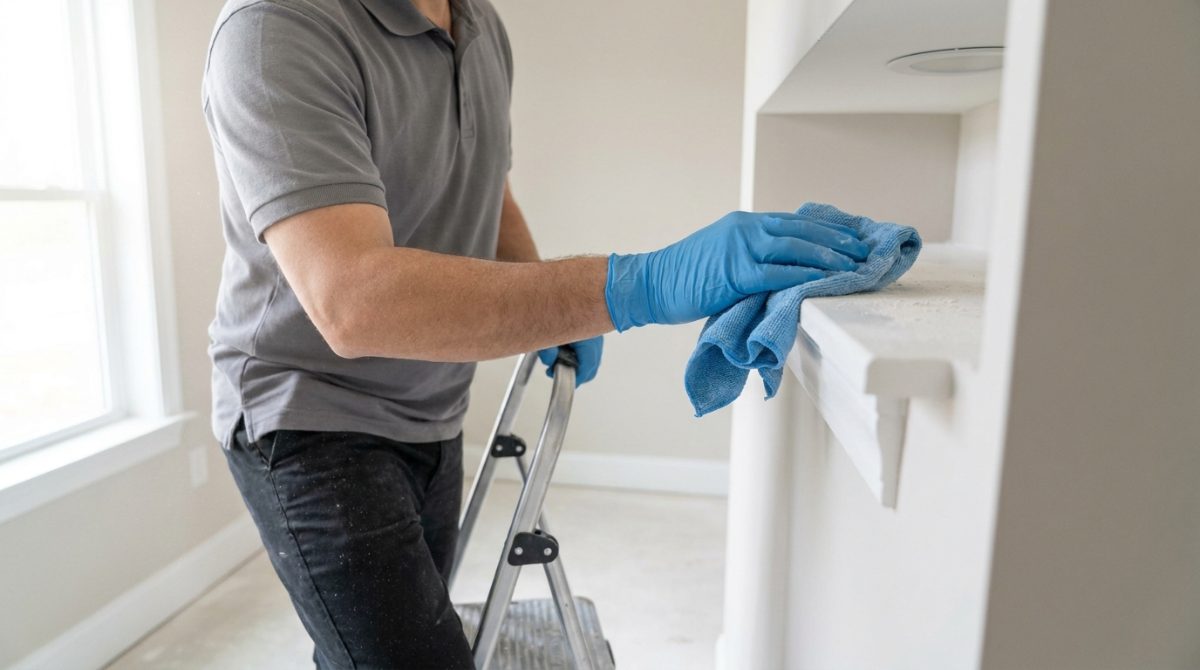
Cleaning the floor first creates extra work, because everything above it will fall back down afterward.
Start with accessible vents, light fixtures, ledges, ceiling-level areas, upper trim, and high wall surfaces, then work progressively downward. This top-to-bottom order is what breaks the cycle of cleaning one area only to dirty it again an hour later.
2. Clean Walls, Trim, and Baseboards Carefully
One of the most common questions after remodeling is how to remove construction dust from walls.
Start by lifting the loose dust away instead of immediately rubbing it into the surface. Appropriate wall finishes can then be wiped using a lightly damp method that suits the paint or material.
Baseboards, molding, door frames, and ledges need separate attention, because their horizontal edges collect fine residue easily.
3. Clean Floors Only After Higher Surfaces
For homeowners wondering how to clean construction dust from floors, the order matters as much as the method.
Vacuum thoroughly before wet mopping so loose dust does not turn into muddy residue. The method should match the surface, whether the room has tile, hardwood, laminate, vinyl, or carpet.
Where buildup has gone deeper than a mop can reach, professional floor and carpet care can address what is left without applying one cleaning method to every surface.
4. Do Not Forget Fabric and Upholstery
Fabric holds fine construction dust even when the hard surfaces around it look clean.
Vacuum sofas, chairs, upholstered headboards, rugs, and other fabric surfaces carefully, and wash removable curtains, cushion covers, and bedding where practical. Skip this step and the dust returns to the air the moment someone crosses a rug or sits down.
5. Detail Windows, Sills, and Frames
Remodeling dust collects around windows, particularly where cutting, sanding, installation, or finishing work took place nearby.
Do not clean only the center of the glass. Include the tracks, frames, sills, and surrounding trim. Detailed window, sill, and frame cleaning is often what finally clears the fine residue that has worked into the corners and tracks.
What Post-Remodel Dust Looks Like Before and After Detailed Cleaning
Picture a typical Dayton home after a kitchen remodel. The homeowner vacuums the floor, wipes the counters, clears the obvious debris, and gets the room looking presentable. Two days later there is another fine layer on the baseboards, the windowsill, the flooring, and the furniture nearby. (This is an illustrative example rather than a specific client project.)
Before detailed cleaning:
- Floors look clean right after vacuuming, then develop another dusty film.
- Dust remains around vent covers and the ledges near them.
- Baseboards and trim still hold fine residue.
- Window tracks and sills contain powdery buildup.
- Upholstered furniture releases dust when disturbed.
- Light fixtures and upper surfaces keep dropping particles onto everything below.
After detailed cleaning:
- High surfaces are cleaned before the final floor pass.
- Vents and the overlooked areas around them get individual attention.
- Trim, ledges, and baseboards are cleaned thoroughly.
- Windows, sills, frames, and tracks are addressed.
- Soft materials are cleaned rather than ignored.
- Fixtures and upper surfaces are finished before the lower areas.
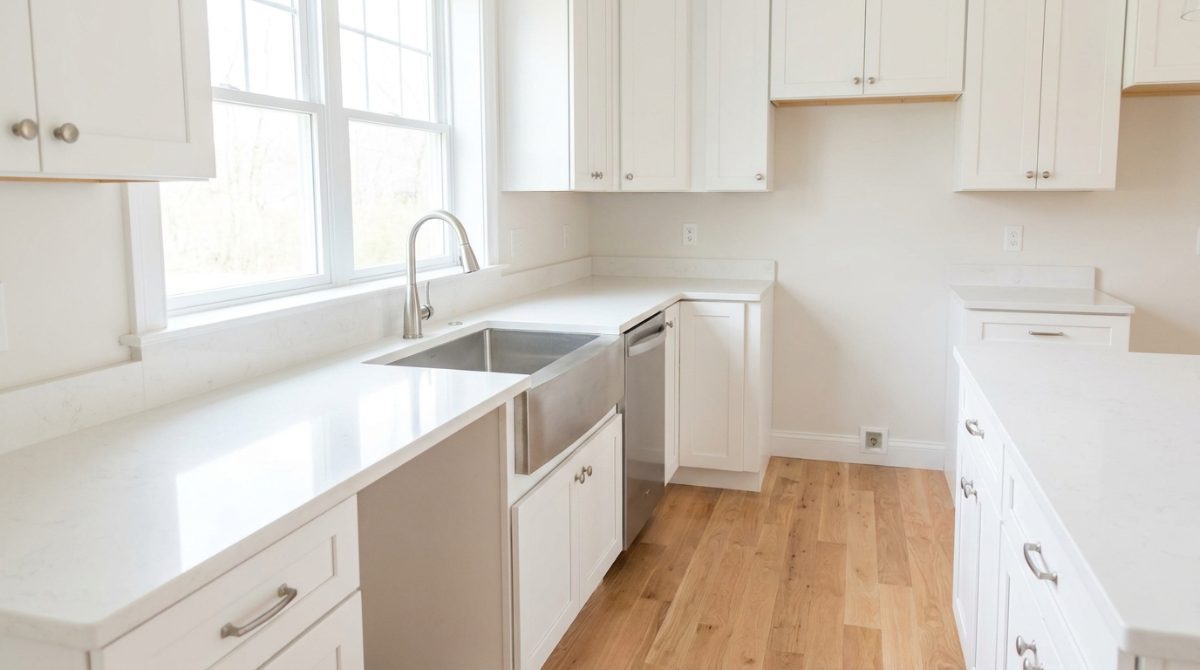
The difference is not cleaning the same surfaces harder. It is removing dust from every place it keeps hiding and resettling.
DIY Cleanup vs. Professional Post-Construction Cleaning
Homeowners can handle plenty of post-remodel work themselves, particularly after smaller projects. Debris removal, quick surface cleaning, light dusting, spot cleaning, and routine floor care are all reasonable DIY tasks.
DIY cleanup is usually enough when:
- The remodel affected only a small area.
- Most of the dust is visible and easy to reach.
- Floors only need routine vacuuming or mopping.
- Light surface dusting is keeping the problem under control.
- You have time to clean systematically.
Professional post-construction cleaning makes more sense when:
- Fine dust keeps returning after repeated cleaning.
- Several rooms were affected by the work.
- Walls, ceilings, trim, fixtures, and ledges all need attention.
- Dust has worked into windows and frames.
- Floors need a detailed final cleaning.
- Kitchens or bathrooms need full surface detailing.
- Upholstery and other soft surfaces are holding dust.
- You do not have time to work methodically from room to room.
A professional service also gives the cleanup a defined order instead of relying on repeated spot cleaning whenever the dust becomes noticeable again. If you only need it once, a one-time cleaning covers the reset without an ongoing schedule.
If the problem is mainly accumulated household dirt rather than remodeling residue, a deep clean is the better fit. If the remodel was done ahead of a sale or a handover, move-in and move-out cleaning and real estate and realtor cleaning are built for that timeline instead. And if the project was a storefront or office rather than a home, our commercial cleaning team handles those — the retail store cleaning checklist covers what customers notice first.
Final Touch Cleaning Services has served the Miami Valley since 2010 with insured, bonded, background-checked cleaners, working across Dayton and nearby communities including Beavercreek, Centerville, and Huber Heights.
Frequently Asked Questions About Construction Dust
Why does construction dust keep coming back after cleaning?
Construction dust stays around vents, along trim, on walls, in fabric, on ledges, and inside small crevices long after the visible surfaces have been cleaned. Airflow and normal household movement disturb those particles and send them back into the air, where they settle again.
How long does construction dust take to settle after a remodel?
Fine construction dust can keep settling for days or longer, depending on the type of work, the airflow in the home, and how much residue was left behind. Drywall sanding in particular creates dust fine enough to become airborne again whenever nearby surfaces or fabrics are disturbed.
Can a regular vacuum remove construction dust?
A regular vacuum removes some loose dust and larger debris, but vacuuming alone does not address dust on walls, trim, vents, fabrics, windows, and fixtures. Effective cleanup generally needs a complete top-to-bottom process.
When should post-construction cleaning be scheduled?
Post-construction cleaning is most practical once the primary remodeling work is finished and contractors have removed their tools and major debris. That lets the detailed cleaning focus on the remaining fine dust, surfaces, floors, windows, fixtures, kitchens, and bathrooms.
Do professional cleaners handle dust around vents and HVAC systems?
Post-construction cleaning covers visible vent covers and the HVAC-adjacent surfaces where construction dust collects. Cleaning inside mechanical HVAC components or ductwork is a separate specialty service, so it is worth distinguishing surface cleaning from dedicated HVAC servicing.
How much does post-construction cleaning cost in Dayton, OH?
Cost varies with the size of the remodeled area, the amount of dust and debris, the number of rooms, and the flooring, windows, and level of detail required. A small bathroom remodel and a whole-home renovation call for very different scopes, so the property should be looked at before any meaningful estimate. More answers are on our cleaning FAQ page.
Stop Cleaning the Same Dust Over and Over
If construction dust keeps returning, the problem is usually not the dust you can see. Fine residue is still sitting on walls, vents, trim, fixtures, windows, fabrics, and floors.
Final Touch Cleaning Services provides post-construction cleaning in Dayton and the Miami Valley built for the fine, stubborn dust and residue left behind after remodeling work. With more than 15 years serving the area and a 100% satisfaction guarantee, the cleaning process is matched to the size and condition of the remodeled space.
Finished your remodel but still finding dust everywhere? Request a free quote or call (937) 521-6243.