
Compare weekly, bi-weekly, and monthly house cleaning side by side so you can choose the right schedule for your Dayton, OH home.
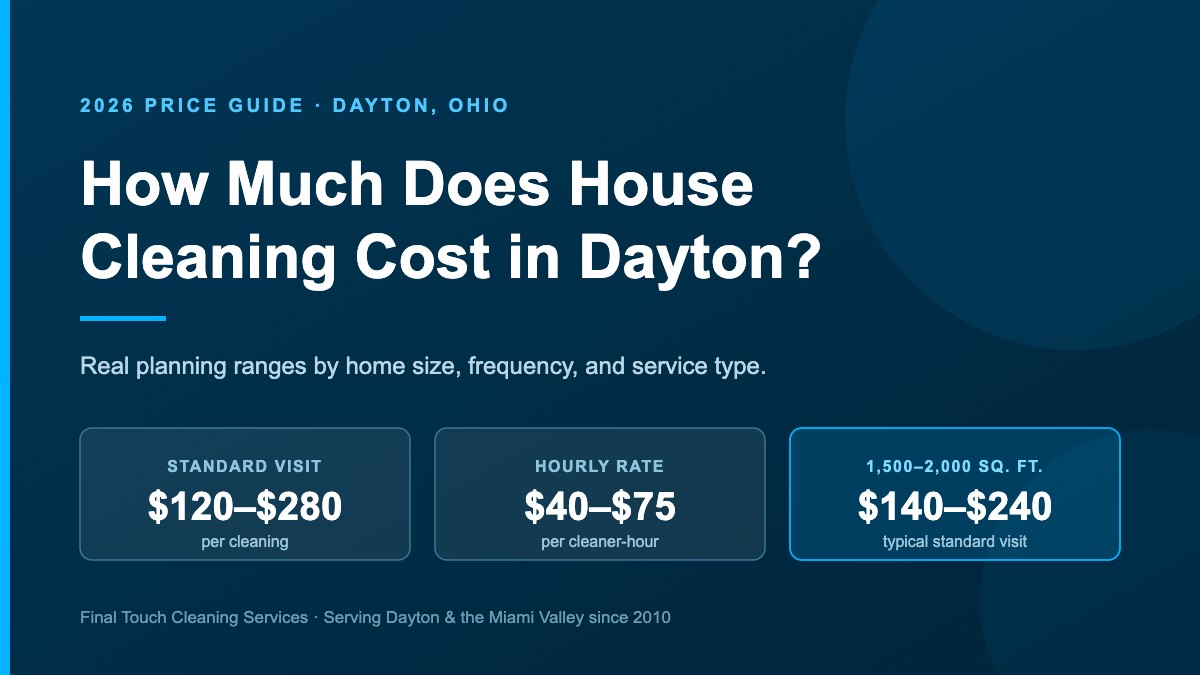
How Much Does House Cleaning Cost in Dayton, Ohio? (2026 Prices)
What house cleaning costs in Dayton, Ohio in 2026 — about $120–$280 per visit or $40–$75 per cleaner-hour, broken down by home size, frequency, and service type.
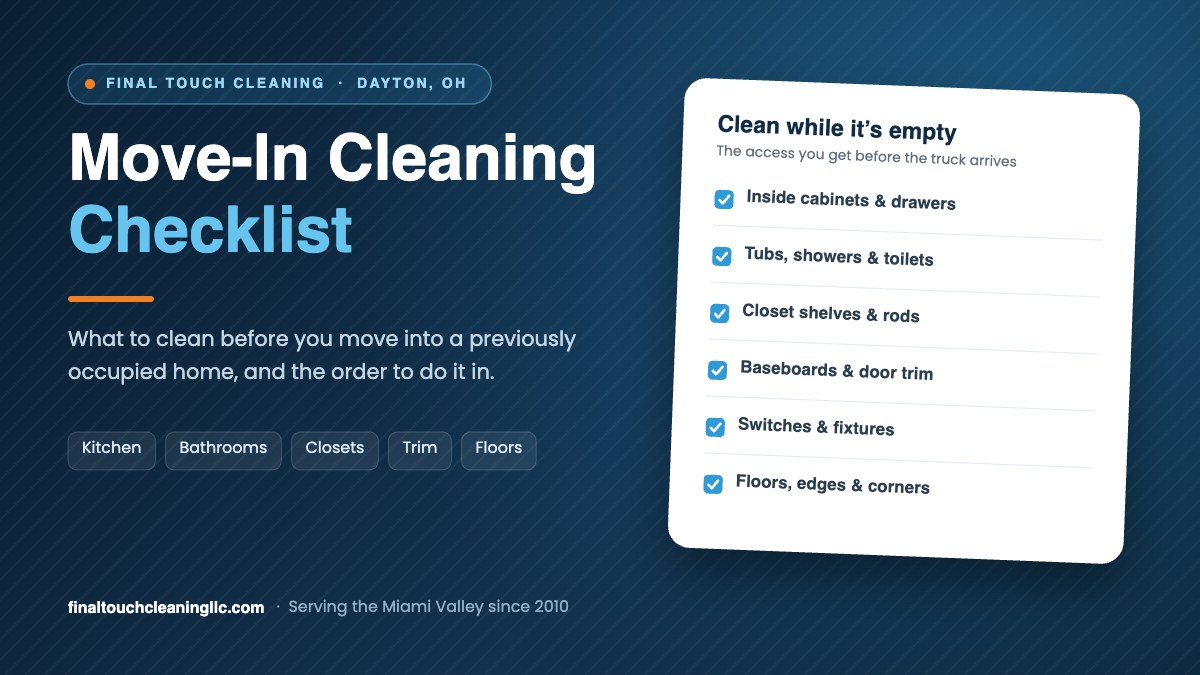
What Should Be Cleaned Before You Move Into a Previously Occupied Home?
A room-by-room move-in cleaning checklist for previously occupied Dayton homes, the order to clean in, and when to hire a pro.

Standard Cleaning vs Deep Cleaning vs Move-Out Cleaning: Which Does Your Dayton Home Need?
Compare standard, deep, and move-out cleaning side by side so you can choose the right service for your Dayton, OH home.

Why Does Construction Dust Keep Coming Back After a Remodel?
Construction dust keeps resettling after a remodel because fine particles hide in vents, trim, fabric and crevices. Here is how to get construction dust out of your house for good.

What Customers Notice First in a Retail Store: A Cleaning Checklist for Dayton Storefronts
Customers judge a store’s cleanliness before they think about products, pricing, or displays. Smudged entrance glass, dirty floors, overflowing trash, a cluttered checkout counter, or a stale smell shapes that first impression within seconds of walking in. For Dayton retailers, a practical retail store cleaning checklist keeps staff focused on the areas shoppers see and touch most. Final Touch Cleaning Services provides a retail and storefront cleaning service that covers entryways, sales floors, fitting rooms, checkout areas, restrooms, breakrooms, stockrooms, high-touch surfaces, and trash. The areas customers notice first are the entrance, storefront glass, floors, smell, and checkout counter. A good checklist puts those at the top: clean glass, clear floors, wiped high-touch surfaces, tidy counters, empty trash, and clean restrooms. High-traffic areas need daily attention. Deeper floor, window, and back-of-house cleaning fits a weekly or monthly schedule. What Customers Notice First When They Walk Into a Store A few visual and sensory details combine to create an immediate impression. First Impression Element What Customers Notice Why It Matters Entryway and storefront glass Fingerprints, streaks, dust, debris near doors The entrance sets expectations for the rest of the store Sales floor Dirt, footprints, stains, dust, loose debris Floors cover a large visible area and drive the store’s overall look Smell Trash odors, stale air, restroom odors An unpleasant odor makes a clean-looking store still feel poorly maintained Checkout area Dust, clutter, fingerprints, overflowing bins This area shapes the customer’s final impression before leaving Restrooms Floors, sinks, mirrors, fixtures, trash, odor A neglected restroom undermines an otherwise clean store Start With the Entrance The entrance deserves priority because almost every customer passes through it. Storefront doors and glass collect fingerprints, dust, water spots, and outdoor debris throughout the day. Stores with large glass fronts also need scheduled streak-free storefront window cleaning to keep the glass clear inside and out. Door handles and nearby high-touch points belong in the daily routine. The Retail Store Cleaning Checklist: Daily, Weekly, and Monthly A useful retail store cleaning checklist separates work by frequency. Cleaning everything deeply every day wastes effort, and leaving customer-facing areas for weekly service lets dirt and clutter build up. Frequency Area Cleaning Tasks Daily Entrance Clean door glass, wipe handles, remove visible debris Daily Sales floor Sweep or vacuum, spot-clean spills, mop hard surfaces Daily Checkout Wipe counters, tidy surfaces, remove trash Daily High-touch surfaces Wipe frequently handled surfaces and fixtures Daily Restrooms Check sinks, toilets, floors, mirrors, supplies, and trash Weekly Fitting rooms Wipe surfaces, clean mirrors, floors, benches, and touchpoints Weekly Shelves and displays Remove dust and visible buildup Weekly Restrooms Deeper cleaning beyond daily upkeep Monthly / Seasonal Windows Clean interior and exterior glass Monthly / Seasonal Floors and carpets Deeper floor maintenance or carpet care Monthly / Seasonal Breakroom / stockroom Clean floors, surfaces, trash areas, and shared spaces Daily Store Cleaning Checklist Daily cleaning covers the areas that visibly deteriorate during business hours: A busy Dayton storefront often needs quick checks during the day on top of scheduled cleaning. Weekly Retail Cleaning Checklist Weekly cleaning targets buildup that is not obvious after one day but shows over time: Monthly and Seasonal Cleaning Storefront windows need more attention during rain, pollen, and heavy-traffic periods. Floors need more than routine sweeping and mopping. Scheduled professional floor and carpet care removes deeper buildup and protects customer-facing surfaces over time. Why Does Cleanliness Directly Affect Sales in Dayton Retail Stores? Customers touch floors, doors, counters, fitting rooms, and restrooms, so cleanliness becomes part of the shopping experience. Whether you run a boutique in Dayton’s Oregon District or a storefront near Austin Landing, the same details shape how shoppers judge your store. Visible neglect makes a store feel disorganized and poorly managed. Clean surroundings make products and displays stand out, because shoppers are not distracted by dirty floors, dusty shelves, overflowing bins, or marked glass. An Illustrative Before-and-After Scenario Consider a typical Dayton boutique where employees clean whenever time allows. This is an illustrative scenario, not a claimed Final Touch client case study. Before Scheduled Cleaning After a Consistent Cleaning Routine Entrance glass shows fingerprints through the week Glass is cleaned on a regular schedule Dust and debris collect around sales-floor edges Routine floor care keeps visible areas cleaner Restroom cleaning depends on employee availability Restroom tasks follow a defined checklist Checkout surfaces are wiped only when buildup shows Counters and touchpoints are part of routine cleaning Deeper cleaning slips during busy weeks Weekly and periodic tasks have scheduled time The difference is consistency. Retail staff handle quick spills and basic tidying well, but deeper cleaning slips when they are serving customers, restocking shelves, managing returns, or closing registers. How Often Should a Retail Store Be Cleaned? High-traffic retail stores need cleaning daily or near-daily, especially around entrances, floors, checkout areas, restrooms, trash, and high-touch surfaces. Smaller boutiques with lighter traffic often schedule professional cleaning a few times per week while staff handle quick daily upkeep between visits. Cleaning frequency depends on: Cleaning does not have to interrupt customers. Final Touch works around store schedules with before-open or after-close service. Stores that need broader ongoing coverage also add an after-hours janitorial service. DIY Checklist vs. Professional Retail Cleaning: Which Makes Sense? Most stores do best by combining employee upkeep with scheduled professional cleaning rather than relying on one alone. Task In-House Staff Professional Scheduled Cleaning Immediate spill cleanup Practical Usually unnecessary Quick checkout wipe-down Practical Supplements staff Trash during business hours Practical Handles scheduled removal Basic tidying Practical Supplements staff Storefront glass detailing Inconsistent during busy shifts Better suited to scheduled cleaning Restroom deep cleaning Possible but time-consuming Easier to maintain consistently Floor maintenance Basic sweeping and mopping Deeper floor care is better scheduled After-hours cleaning Requires employee time after shifts Scheduled outside business hours Fitting-room detailing Often delayed during busy periods Included in routine service A small store manages routine cleaning internally. A busier location uses scheduled cleaners for recurring tasks. Final Touch Cleaning Services has served the Miami Valley since 2010